Solitaire: Classic Klondike
- 4.4
- Rating
- 10.00M
- Installs
- Free
- Price
 Analysis by App-foxy
I spent time with Solitaire as a quiet, familiar card game rather than expecting a large adventure or a complicated strategy title. That distinction matters. This is a free card game from Big Cat Studio - we make brain games, aimed at people who want a recognizable solo pastime with a little more structure than simply dealing cards on a table. Its appeal comes from short sessions, readable rules, visual themes, and daily challenges that give a routine hand of solitaire a reason to feel fresh.
My first impression was that it understands why people return to this kind of game. You can open it for a few minutes while waiting somewhere, play more carefully when you have time, or use it as a low-pressure way to settle your attention. The experience is not built around a dramatic story or a long campaign. Instead, it asks whether a traditional card layout, a changing visual presentation, and a regular challenge are enough to create a dependable habit. For me, the answer is mostly yes, although players looking for deep progression or a highly social card experience may find it limited.
How the early goals make a familiar card game feel purposeful
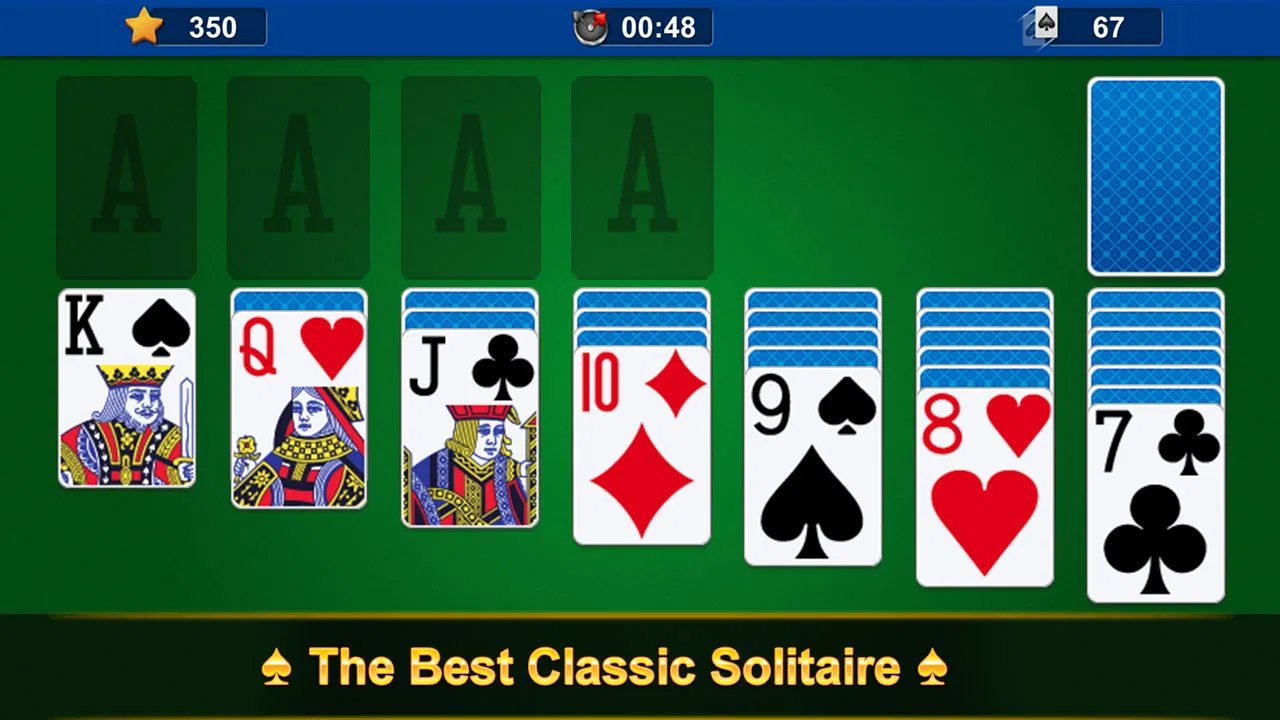
The first goal is simple: complete a solitaire deal by arranging cards in the correct order and suit. That sounds obvious, but it is exactly why the game is approachable. I did not need to learn a new card system, memorize special abilities, or understand a complicated tutorial before playing. The early minutes are about recognizing the familiar rhythm: uncover hidden cards, move cards between columns, build sequences, and work toward the foundation piles.
You May Also Like

 AccuWeather: Weather Radar
AccuWeather Review: A Quick, Clear Forecast for Everyday Decisions
For everyday plans, the best forecast is the one you can understand quickly. AccuWeather makes rain timing, radar, and local conditions easy to act on, with a few trade-offs.

 Hill Climb Racing
Why Hill Climb Racing Still Turns Crashes Into One More Run
A tiny car, a bumpy hill and one more upgrade: Hill Climb Racing keeps resurfacing because its simple chaos makes every near-miss feel personal.

 AliExpress - Shopping App
AliExpress Makes Global Shopping Feel Personal, but Shoppers Bear the Risk
AliExpress turns a global marketplace into a pocket-sized discovery engine. Its reach is useful, its shopping loop compelling, and its trade-offs easy to miss.

 Lords Mobile: Kingdom Wars
Lords Mobile Is a Kingdom-Building Routine, Not a Quick Match
A case-by-case verdict on the building, battles, device demands, and social commitments that make Lords Mobile rewarding for some players and exhausting for others.

 PDF Scanner app - TapScanner
TapScanner Makes Paperwork Easier to Capture, Check, and Share
TapScanner makes scanning with a phone feel less like a rescue operation and more like a dependable step in getting work done. Its capture tools are useful, though not flawless.

 Block Blast!
 Shows How Much a Puzzle Game Can Leave Out
A quiet grid game shows why puzzle players increasingly value instant clarity, repeatable skill and low-pressure play—and where the genre still needs to catch up.
More From Our News Desk
View All News


That straightforward start also makes the game suitable for different kinds of players. Someone who already plays solitaire can begin immediately, while a less experienced player can learn through repetition instead of facing a wall of instructions. The classic card-game format is the main onboarding tool. It gives every move a visible purpose, and a successful move often reveals the next decision without requiring a separate explanation.
I found that the best early objective is not merely finishing a hand. It is creating room on the table. Moving a visible sequence may look useful, but uncovering a concealed card can be more valuable because it expands the number of choices available. That small shift in thinking turns the game from random card movement into a series of practical priorities. When I played too quickly, I often used an available move simply because it was legal. When I paused to ask which move exposed the most information, the layout became easier to manage.
The daily challenge gives the opening experience an additional target. Rather than playing only when the mood strikes, I could treat the daily hand as a small appointment with the game. It is a useful idea for players who like a clear reason to return, but it does not turn Solitaire into a demanding competitive title. The challenge is still centered on the same card fundamentals, so its value depends on whether you enjoy repeating a familiar format with a fresh arrangement.
There is also a practical benefit to the game’s free price. I could try it without making a commitment, which is important for a genre with many similar choices. The content rating is Everyone, making the presentation broadly accessible for families and casual players. That does not mean every player will enjoy it equally: people who dislike repetition may lose interest quickly, while anyone who finds comfort in predictable rules will understand the attraction almost immediately.
Small decisions matter more than fast tapping
One useful habit is to delay automatic moves until I have checked what they reveal. A card that can go to a foundation pile may be safe to move, but sometimes keeping it in the tableau temporarily preserves a sequence that helps uncover another card. This is not an advanced feature hidden behind a menu; it is a way of using the standard rules more thoughtfully. The game rewards patience more than speed, especially when several legal moves appear at once.
I also learned to treat empty columns as valuable space rather than as an invitation to move anything immediately. An open column can allow a useful king sequence to be placed there, but creating that space too early may leave the rest of the layout awkward. This makes the early game more interesting than the simple appearance suggests. The cards are familiar, yet the order in which I make ordinary moves changes the entire shape of the hand.
That is where the app’s first layer of progression comes from. It is not necessarily about gaining a new ability. It is about becoming more deliberate. A new player may focus on clearing visible cards, while an experienced player thinks several moves ahead and protects future options. Solitaire gives enough room for that improvement to feel real, even though the rules never become more complicated.
Progress signals, themes, and the rhythm of returning
Solitaire does not need a traditional campaign to communicate progress. Each completed hand is its own small result, and the daily challenge creates another recurring marker. I could tell whether I was improving by noticing fewer careless dead ends, spotting better sequences earlier, and finishing layouts with more confidence. This is a quieter form of progression than unlocking a character or building a collection, but it suits the genre.
The beautiful themes mentioned in the game’s presentation are important because card play can become visually repetitive. Changing the surrounding look gives the familiar layout a different mood and helps prevent every session from feeling identical. I would not treat themes as a substitute for gameplay depth, but they do affect how comfortable the app feels during longer sessions. A calm visual setting can make the game feel more like a break, while a brighter presentation can make short sessions feel livelier.
My advice is to choose a theme that keeps the cards easy to distinguish rather than selecting one only because it looks decorative. In a solitaire game, contrast and clarity matter more than visual novelty. If the background competes with the card faces, the presentation becomes a distraction. The strongest theme is the one that lets me read suits, ranks, and sequences without hesitation.
The game’s popularity suggests that this approach connects with a large audience. It has a 4.4 average from around thirty-seven thousand ratings, and it has passed ten million installs. Those figures do not guarantee that every player will like the experience, but they do place it among the more established casual solitaire choices rather than an obscure experiment. I see that scale as useful reassurance for someone wanting a familiar, widely used option, while still keeping expectations realistic about what the game is designed to do.
Version 1.36.305 shows that the app remains an actively presented product rather than a forgotten card table left unchanged. I would still judge it by the moment-to-moment play, because a version number alone does not make a solitaire game better. Here, the important question is whether the current package gives me enough reason to return after the first few hands. For my playing style, the daily challenge and visual variety do more of that work than any sense of a long-term campaign.
A practical routine for short sessions
My favorite use case is a ten-minute waiting period. I can start a hand, make a few meaningful moves, and stop without needing to remember a complicated story or coordinate with other players. If I have longer, I can continue into another deal, but the game does not punish me for treating it as a small break. That flexibility is one of its strongest qualities.
For a better routine, I would separate casual hands from deliberate practice. During a quick break, I would play naturally and accept that a deal may not finish. When I want to improve, I would slow down at the first major choice and compare moves based on what they uncover. This makes the same app serve two purposes: relaxation when I want low mental pressure, and light strategic practice when I want to concentrate.
The daily challenge can fit into that routine without taking over the experience. I would use it as the day’s focused hand, then return to ordinary play when I want something less goal-oriented. That separation prevents the challenge from turning every session into an obligation. The healthiest way to use the daily feature is as an invitation, not a requirement.
There is a trade-off here. A daily target can help a casual player build a habit, but habit-building can also make a relaxing game feel like another task on a checklist. Players who are sensitive to streaks, reminders, or unfinished goals should decide whether that structure feels motivating or tiring. The game works perfectly well as an occasional pastime, so there is no need to force a daily schedule if that removes the fun.
Difficulty curve: where the challenge comes from
The difficulty in Solitaire comes mainly from the arrangement of cards and from the quality of the decisions I make, not from a constantly expanding rule set. Early hands can feel easy because the correct moves are visible. Later decisions become harder when several columns need attention and one wrong choice reduces the available options. The curve is therefore personal: improvement makes familiar layouts feel simpler, while careless play can make an ordinary deal feel stuck.
I appreciate that the game’s challenge remains readable. When I reached a difficult position, I could usually identify the problem: I had moved a sequence too early, failed to uncover a hidden card, or placed a card in a way that blocked a more useful arrangement. That clarity is valuable for new players because failure can teach something. The game does not need a complicated explanation of why a move was bad; the restricted layout often makes the consequence visible.
One of the more interesting trade-offs is between immediate progress and future flexibility. Moving cards to the foundation feels like progress because the cards are leaving the tableau, but the best decision is not always the one that produces the most visible cleanup. Sometimes I benefited from keeping a card available to build a descending sequence. This makes the game more thoughtful than a simple “move every legal card” routine.
I also recommend scanning the tableau before touching the stock or waste area. The stock can offer tempting possibilities, but a move already available on the main layout may reveal a hidden card and create a stronger chain of decisions. This small workflow change improved my results more than tapping faster. It is a concrete advantage for anyone who wants to play with more control without turning the experience into serious competitive training.
Still, players should not expect every hand to feel perfectly balanced around their skill. Solitaire naturally includes layouts that feel generous and others that become frustrating. If you want a card game where every loss can be traced to an opponent’s clever move, this is not the right kind of challenge. The tension is solitary and self-directed. You are mostly competing against the layout, your patience, and your own tendency to choose the first available move.
Who will enjoy the pacing, and who may not
The pacing works especially well for people who like gradual decisions. Each move is small, but the consequences accumulate. I could play slowly, reassess the board, and enjoy the feeling of making a clean sequence. The game is also a good fit for players who want something more engaging than a passive distraction but less demanding than a fast multiplayer card battle.
On the other hand, anyone seeking constant novelty may find the pacing too restrained. The basic activity remains solitaire, and themes cannot change that. There are no story chapters to discover in the information presented for the game, no opponent personalities to study, and no social table to create pressure. A different card game would be better if your priority is bluffing, direct competition, deck construction, or dramatic turn-based abilities.
It is also not ideal if you want a strong sense of permanent achievement. Completing a hand feels satisfying, but the satisfaction is local to that session unless the daily challenge gives you a reason to remember it. Players who prefer collecting items, unlocking a long sequence of rewards, or building a visible profile may find the progression too light. Solitaire’s strength is that it gets out of the way; the same simplicity is its main limitation.
Retention pressure and the balance between habit and relaxation
The game encourages returning through two gentle pressures: the promise of another deal and the presence of daily challenges. That is a sensible approach for solitaire because the basic rules are already familiar. I do not need to learn a new system each day; I only need a reason to sit down and try again. The result is a loop based on repetition with variation, rather than a loop built around collecting increasingly complicated rewards.
For me, that loop is most effective when I have a clear stopping point. Finishing a hand provides a natural break, and a short unsuccessful attempt does not require a large time investment. This makes the app easier to fit around real life than games that expect long uninterrupted sessions. I could play before an appointment, during a quiet evening, or while taking a mental pause from work.
The possible downside is that daily challenges can create a subtle sense of unfinished business. If you enjoy routine, that can be a positive nudge. If you prefer games with no recurring expectations, it may feel like unnecessary pressure. I would not recommend treating completion as a duty. The best experience comes from using the feature to add variety while keeping ordinary hands available for completely casual play.
Another retention factor is visual freshness. Themes can make repeated sessions more pleasant, especially when I spend enough time with the app to notice the background and overall presentation. But visual changes have a natural limit. They can refresh the atmosphere, not the underlying decisions. After a while, the question becomes whether I still enjoy solving solitaire layouts. If the answer is no, a new theme will probably delay boredom rather than solve it.
The developer, Big Cat Studio - we make brain games, has positioned this as a broadly accessible brain-game experience rather than a specialist card simulator. That framing matches my experience: the game asks for attention and planning, but it remains approachable. The minimum operating requirement is Android 6.0, so it is available to users with older supported Android devices as well as more recent phones. I would still pay attention to how comfortably the cards fit on a smaller screen, since careful reading is central to the experience.
How it compares with ordinary alternatives
Compared with a basic preinstalled solitaire game, this version has a stronger sense of presentation because of its themes and a clearer reason to return through daily challenges. A plain alternative may be better if you want the fewest distractions and only the card layout itself. I prefer Solitaire when I want the familiar game to feel like a maintained mobile product rather than a bare utility.
Compared with multiplayer card games, it is calmer and more private. There is no need to wait for another person, react to an opponent’s style, or worry about losing because someone else is faster. That makes it better for decompression, but worse for anyone who gets energy from competition. A multiplayer option will provide more social tension; this game provides more control over pace.
Compared with elaborate strategy card games, Solitaire is far easier to enter and much less demanding to manage. You do not need to build a deck or learn a large collection of card effects. The trade-off is obvious: there is less variety in the decision system and less long-term discovery. I would choose this app when I want a familiar puzzle, not when I want a hobby that keeps expanding.
My progression verdict after living with the routine
Solitaire sustains play through modest but effective signals. The first goal is completing a deal. The next is making smarter choices, especially when deciding whether to expose a hidden card, preserve a sequence, or move something to a foundation. Daily challenges provide a recurring reason to open the app, while themes keep the repeated layout from feeling completely static. None of this creates a deep progression system, but it does form a coherent loop for casual players.
The most important limitation is also the clearest: if the basic solitaire format does not already appeal to you, the surrounding presentation will not transform it into a different genre. The game is not the right choice for direct competition, narrative progression, collecting, or complex deck strategy. It is also possible to outgrow the daily rhythm once the familiar decisions stop feeling satisfying.
For the right person, though, that restraint is a benefit. I would recommend it to someone who wants a free, accessible card game for short breaks, a player who enjoys improving through careful decisions, or anyone looking for a quiet daily challenge without a steep learning curve. I would skip it in favor of a multiplayer or deck-building alternative if I wanted social interaction, stronger long-term unlocks, or more dramatic changes from one session to the next.
My final view is positive but measured. The game does not need to reinvent solitaire to be useful; it needs to make the classic format comfortable, readable, and easy to revisit. With its familiar card play, visual themes, daily challenges, and broad accessibility, it succeeds at that job. Solitaire is at its best when you want a dependable mental pause, not an endless progression marathon. That makes it an easy recommendation for relaxed solo play, provided you are happy with a game whose rewards come mostly from better decisions and the quiet satisfaction of finishing one more hand.
FAQs for Solitaire: Classic Klondike
01What features does the Solitaire app offer?
The Solitaire app provides a classic card game experience with several customization options. Users can choose from different card designs and backgrounds, enjoy daily challenges, and track their statistics. The app also includes hints and undo options, making it accessible for both beginners and seasoned players.
02Is the Solitaire app free to download and play?
Yes, the Solitaire app is free to download and play. However, it may contain in-app purchases and ads. These purchases are typically for removing ads or buying cosmetic items, such as new card designs or themes. Users can enjoy the game without spending money, but optional purchases enhance the experience.
03Can I play Solitaire offline?
Absolutely! The Solitaire app can be played offline, making it perfect for commutes or areas with limited connectivity. Offline play allows users to enjoy the game without an internet connection, ensuring uninterrupted gameplay. However, certain features like daily challenges might require internet access.
04Does the Solitaire app support multiple languages?
Yes, the Solitaire app supports multiple languages, making it accessible to a wider audience. Users can easily switch between languages in the settings menu. This feature ensures that players from different regions can enjoy the game without language barriers, enhancing the overall user experience.
05How can I ensure my progress is saved in the Solitaire app?
Progress in the Solitaire app is typically saved locally on your device. To ensure your progress is safe, consider linking the app to your social media account or using cloud save features, if available. This will allow you to restore your progress if you switch devices or reinstall the app.
Pros
- Intuitive interface for easy gameplay.
- Multiple themes to customize the look.
- Offline mode available for play anywhere.
- Daily challenges to keep users engaged.
- Smooth animations enhance user experience.
Cons
- Limited hints in free version.
- Ads can interrupt gameplay frequently.
- No multiplayer option available.
- In-app purchases can be pricey.
- Lacks advanced statistics tracking.

Solitaire: Classic Klondike
Gallery